Blog
/
Design
5 social media design trends for 2026 that actually drive reach
Which visual trends in Instagram and Meta Ads deliver the greatest reach in 2026? We break down 5 current approaches with real examples from HD Creative.
Posted at
Posted on
Design
The Instagram algorithm changes every quarter, but one thing stays constant: people stop on what looks interesting. The best targeting won’t save a weak creative. The biggest budget won’t make up for a boring design.
We analyzed hundreds of posts, ad campaigns, and case studies from Ukrainian and international brands—and identified 5 trends that are truly impacting reach, saves, and click-through rates in 2026.
Trend 1. Bold Typography as the Main Element
In 20256, text became a full visual element—not a complement to the image, but the main hero of the frame. Large, bold, even aggressive fonts on a contrasting background are not just aesthetics, they are a function.

Why it works: the first 0.3 seconds of feed scrolling are your only chance to stop attention. The brain processes images more slowly than large text. “NO STUDIO OR PHOTOGRAPHERS” on a blue background is read instantly.
How to apply it: choose one strong message for the first frame of a Reel or carousel. Make the font as large as possible—it should take up 60–80% of the area. Contrast should be 100% only: white on dark or black on white. No pastel combinations.
In practice: in Meta Ads, Bold Typography reduces cost per click by 20–35% compared to similar image-based ads without text.
Trend 2. Raw Authenticity — deliberate “not pretty” design
The paradox of 2026: audiences trust content that looks “imperfect” more. After years of polished gloss—handheld shots, unedited workflow photos, “ugly” fonts with character—all of this is perceived as honesty.
This doesn’t mean doing things badly. It means being intentionally informal. The difference between “poor quality from laziness” and “live quality from authenticity” is in the details and intent.

How to apply it for business: behind-the-scenes shots—process, workspace, moments without retouching. In ads—screenshots of messages from clients (with permission), “raw” explanatory videos. In branding—handwritten elements, textures, uneven edges.
This works especially well for Ukrainian brands right now—authenticity and a “familiar, one-of-us” feel are key values in 2026.
Trend 4. Hyper-specific Niche Aesthetics
General “beautiful design” loses to a specific niche aesthetic. Coffee shop audiences recognize a “coffee” aesthetic instantly—and stop. Craft brewery audiences do the same. Premium cosmetics audiences do the same.
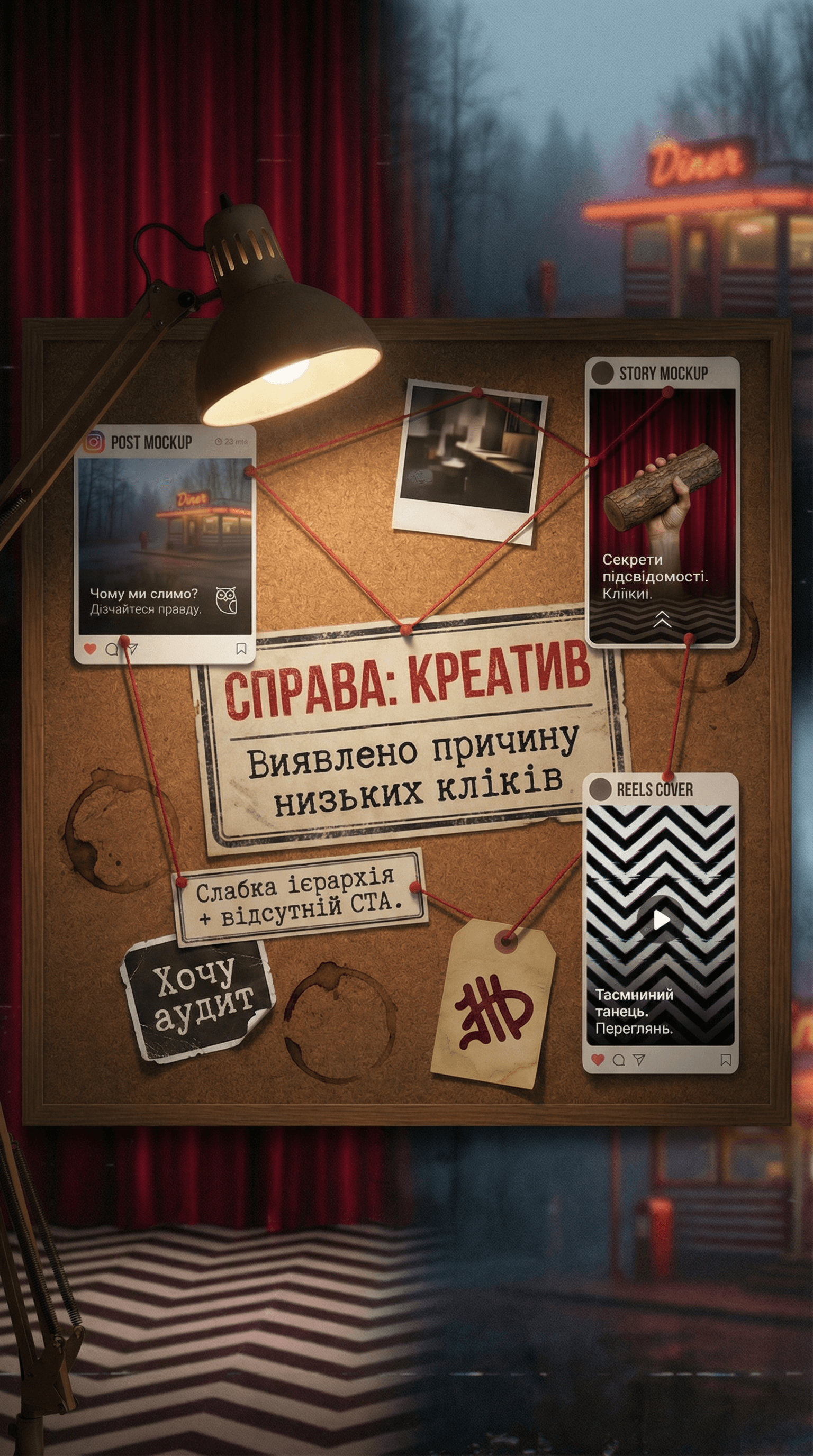
In 2026, the most successful brands on social media don’t try to appeal to everyone. They resonate deeply with their niche—through color, typography, photography style, even through the way images are cropped.
How to apply it: identify 3–5 Instagram accounts your ideal audience follows (not competitors, but content they consume). Analyze the aesthetic—colors, mood, style. That is your visual direction.
Example from our practice: for Kulturalna Kombucha, we combined Ukrainian folk aesthetics with modern bold design. The result—brand audiences immediately “recognized their own.”
Trend 4. AI-enhanced Realism in Product Visuals
Product images in 2026 look “too good to be a photo, but too realistic to be an illustration.” These are AI-enhanced product shots—and this style is becoming the standard for progressive brands.
Levitating products. Splash effects. Fruit slices in the air. Iridescent highlights. It’s all AI, and it all looks like expensive studio photography. At the same time, it is produced in 48 hours and without a single photographer.

For Instagram ads, this style shows a 25–40% higher CTR compared to standard product photos—because it stops attention even in a crowded feed.
Important note: AI product shots should look intentionally surreal or intentionally hyper-realistic. “Almost real but something is off” is the worst option. If you order AI visuals, make sure the studio is not cutting corners on generation quality and post-processing.
What unites all 4 trends
At first glance, these trends are different: bold typography minimalism, chaotic authenticity, motion, niche aesthetics, AI realism. But they share one common feature.
Each of them stops the scroll. Not because of budget or volume—but because of a clear decision. In 2026, it’s not the one who posts the most who wins, but the one whose content makes people stop.
How to apply these trends to your business
20. Start with one trend—don’t try to implement all five at once
21. Test: run two posts or ads in different styles and compare reach and saves
22. Adapt to your niche—a trend that doesn’t match your audience is better left unused
23. Be consistent—one post in a new style won’t deliver results; you need at least 4–6 weeks
Social media design in 2026 is not about beauty. It’s about function. Every pixel should have a reason to stop, hold, and convert. If your content still doesn’t do this, it may be time to talk to a team that knows how.